
Land Survey Drafting
LiDAR Scanning
CAD drafting from high-resolution laser scanning data that captures detailed site conditions for mapping, modeling, and design.
Overview
What is LiDAR Scanning?
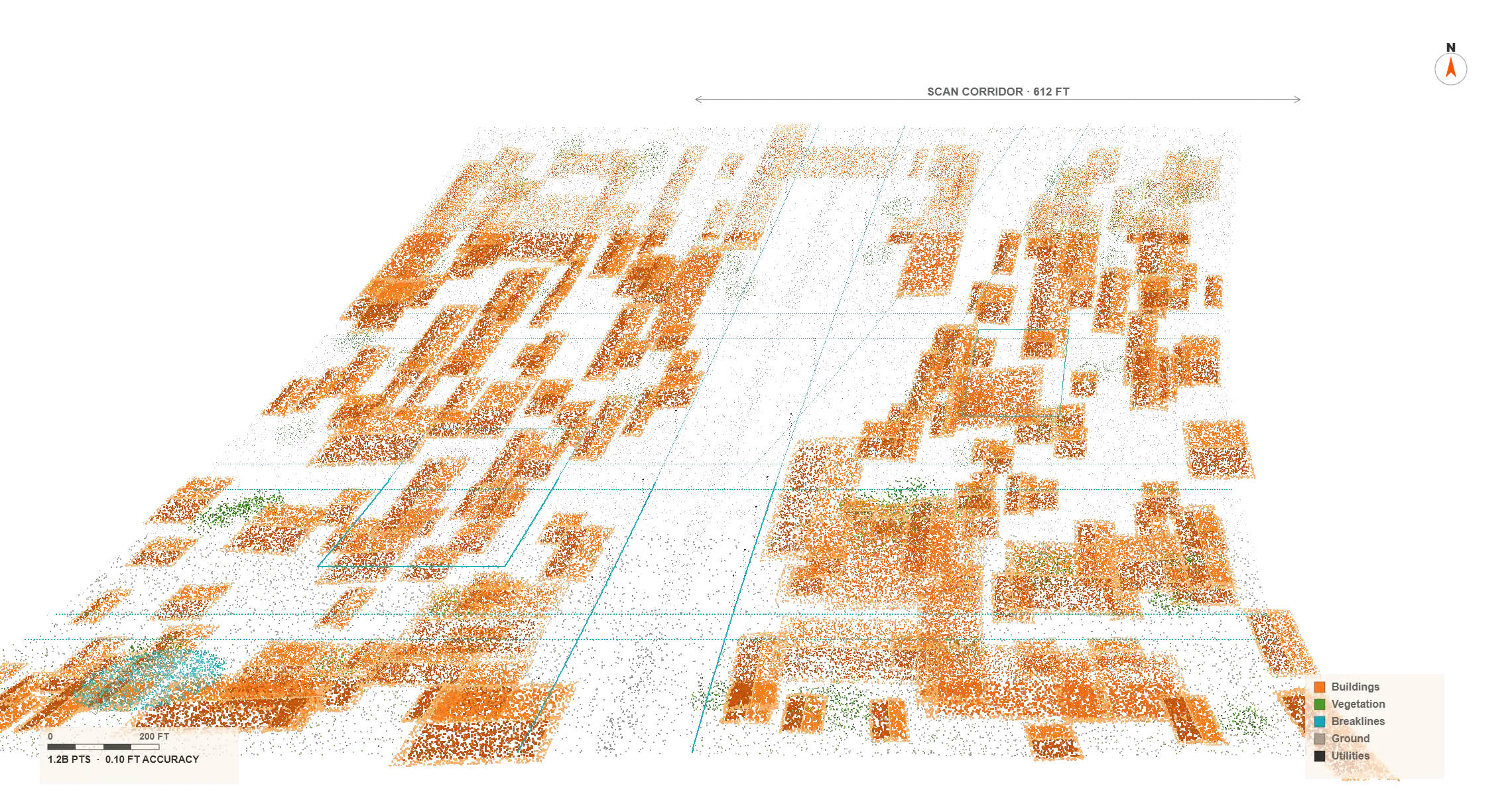
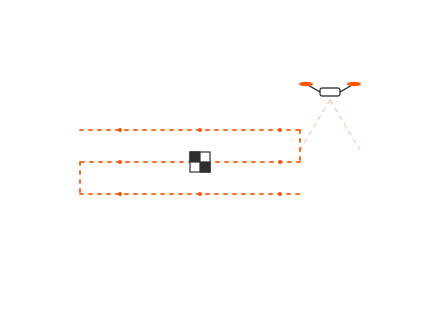
LiDAR (Light Detection and Ranging) scanning is a surveying method that captures three-dimensional data of terrain, structures, and landscapes using laser pulses. The resulting point cloud records precise elevation, distance, and surface detail, which makes it well suited to infrastructure planning, engineering design, construction, and mapping. Surveyors capture LiDAR from aerial drones, mobile platforms, or terrestrial scanners, so data collection reaches complex or inaccessible sites.
Our LiDAR drafting service converts raw scan data into clean CAD drawings, digital terrain models (DTM), contour maps, and 3D models built for engineering workflows. The output gives you reliable documentation for planning, analysis, and decisions across civil, architectural, mining, and utility projects. It also lets surveyors and civil engineers monitor natural and built conditions with accuracy.
At a glance
- StandardSurvey & mapping standards
- Best forLarge or complex sites
- CoversPoint cloud, surfaces & models
- DeliveryAutoCAD DWG · PDF
- SourceTerrestrial, mobile & aerial LiDAR
What we deliver
What's included in LiDAR Scanning
We turn highly detailed three-dimensional site data captured with laser technology into accurate mapping, modeling, and analysis deliverables.
Point Cloud Processing & Registration
Cleaning, aligning, and merging raw LiDAR scans to create an accurate, unified point cloud dataset.
Digital Terrain Model (DTM) Creation
Extraction of ground surface data from point clouds to generate precise terrain models for engineering analysis.
Contour Mapping & Topographic Drafting
Topographic LiDAR uses a near-infrared laser to map land elevation, hydrography, and geography.
3D Surface & Mesh Modeling
Development of accurate 3D surfaces and mesh models for visualization, simulation, and design applications.
As-Built Documentation from LiDAR Data
Creation of precise as-built drawings reflecting actual site conditions captured through LiDAR scanning.
Infrastructure & Utility Mapping
Identification and drafting of roads, structures, pipelines, and utility networks from LiDAR datasets.
Volume Calculations & Earthwork Analysis
Computation of cut-fill volumes and material quantities for construction, mining, and land development projects.
CAD Conversion (DWG, DXF, Revit, GIS)
Transformation of processed LiDAR data into industry-standard CAD, BIM, and GIS formats for project use.
Why it matters
Why is LiDAR Scanning necessary?
LiDAR drafting converts dense laser scan data into structured engineering drawings and models that support planning, design, and construction decisions. A raw point cloud is hard to interpret and cannot drive project execution on its own. Drafting matters most on large, complex, or hard-to-access sites, where traditional field survey is slow or unsafe. It improves accuracy, reduces uncertainty, and keeps disciplines coordinated.
Captures fine ground features, vegetation, structures, and surface variation for site assessment in engineering, environmental studies, and planning.
Generates accurate height measurements and contour lines that support grading design, drainage planning, flood analysis, and earthwork evaluation.
Supplies reliable base data for designing transportation networks, utility corridors, construction layouts, and large-scale development projects.
Provides dependable digital documentation for cut-fill analysis, construction tracking, and integration with modern design and management systems.
Allows data collection and analysis in hazardous, remote, or densely vegetated areas without extensive fieldwork, so the work is safer and faster.
Reflects actual terrain and built features, which reduces design assumptions and helps engineers fit their designs to conditions on site.
Where it applies
Industries We Serve
Smart City & Urban Development
Supporting urban planning and residential development with precise survey drafting, base maps, and infrastructure layout documentation.
Transport & Navigation
Providing accurate alignment drawings, route survey drafting, and mapping support for transportation planning and network development.
Irrigation, Water & Disaster Management
Delivering terrain-based survey drawings for water resource planning, drainage design, and flood risk mitigation projects.
Defence & Security
Supplying detailed topographic and boundary drafting to support strategic planning and security infrastructure development.
Forest Management
Assisting land assessment, vegetation mapping, and conservation planning through reliable survey-based documentation.
Utilities (Power / Telecom / Water)
Preparing accurate utility mapping and corridor drawings for installation, expansion, and maintenance planning.
Infrastructure Development
Supporting large-scale civil projects with detailed site plans, contours, and terrain-based engineering drawings.
Mining
Providing survey drafting for exploration planning, excavation layouts, and volume calculations in mining operations.
Oil & Gas Pipelines
Producing precise route alignment drawings, corridor maps, and site documentation for pipeline projects.
Flood Mapping
Creating elevation-based maps to identify flood-prone zones and support flood control planning.
Environmental Studies
Delivering survey-based maps and terrain data for environmental assessment and regulatory documentation.
Highway & Road Survey
Supporting road design, widening, and construction with alignment plans, cross-sections, and topographic drawings.
Land Cover Classification
Preparing maps that categorize land use patterns to support planning, zoning, and environmental management.
Landslide Risk Assessment
Providing terrain analysis drawings to identify unstable slopes and support mitigation planning for safety.
How it works
Our End-to-End Process
Initial Consultation
We start by mapping your project scope, site requirements, available LiDAR data, specifications, timelines, and deliverables.
Data Processing
We organize your LiDAR data and process it into usable outputs: classified point clouds, digital terrain data, and surface models in standard formats.
LAS File Classification & Conversion
We analyze the raw LAS files and classify points as ground or non-ground to prepare accurate base data for drafting.
Linework Extraction & Feature Creation
We extract terrain breaklines, boundaries, structures, and utilities from the point cloud and convert them into precise 2D and 3D CAD linework.
Contour & Surface Generation
We build digital terrain surfaces (TIN/DTM) from the processed data and generate accurate contours, elevations, and terrain representations.
Finalization & Delivery
We run quality checks on the completed drawings, deliver them in your required formats, and fold in your feedback through revisions.
Why Arcengine
Why Choose Us
Efficient Project Coordination
Our team handles LiDAR drafting end to end, coordinating contractors, engineers, architects, and clients so workflows stay smooth and project costs stay controlled.
Comprehensive LiDAR Drafting Solutions
Arcengine provides expert drafting services for LiDAR scanning projects, including subdivisions, environmental topography, geographic studies, site development, and government infrastructure projects.
Commitment to Client Satisfaction
We put client satisfaction first and consistently deliver accurate, reliable CAD drafting services built around each project's requirements.
High-Quality and Cost-Effective Deliverables
Our team focuses on producing high-quality CAD drawings while maintaining cost efficiency, so clients get precise results without unnecessary expenses.
Trusted Alternative to Expensive Drafting
Arcengine offers dependable, high-quality LiDAR drafting at an affordable price, with professional expertise and accuracy on every project.
Explore more
Our Other Services
FAQ
Frequently Asked Questions
LiDAR data processing includes cleaning, classifying, and organizing point cloud data, extracting ground and feature information, and converting it into usable CAD drawings, terrain models, and mapping outputs.
Yes, LiDAR drafting services can be customized based on project scope, accuracy needs, deliverable formats, coordinate systems, and industry standards.
Costs depend on data volume, site complexity, required outputs, accuracy levels, project timeline, and processing effort involved.
Common outputs include CAD drawings, digital terrain models (DTM), contours, 3D surfaces, site plans, sections, and GIS-compatible files.
Project duration varies based on dataset size, complexity, and deliverable requirements, ranging from small site projects to large infrastructure assignments.
Yes, LiDAR drafting workflows support processing of extensive datasets for infrastructure, mining, corridor mapping, and regional development projects.
Relevant sample deliverables or case references can be shared upon request, subject to confidentiality and project permissions.
Strict data handling protocols, secure file transfer methods, and controlled access keep project information confidential and protected.
Post-delivery support includes revisions, clarifications, and assistance so the drawings meet project expectations.
Quality assurance procedures include accuracy checks, validation against control data, and compliance with project specifications.
We regularly adopt updated processing methods, software tools, and industry practices to keep outputs accurate and efficient.
Industry-standard LiDAR processing, CAD, and GIS software platforms are used to produce precise and compatible deliverables.
Get in touch
Point clouds into CAD, project-ready
Send us your LiDAR point cloud. We'll return clean, drafting-ready surfaces, sections, and CAD deliverables in AutoCAD DWG and PDF.