
BIM Modeling
BIM Coordination Services
We keep your architectural, structural, and MEP models aligned on shared coordinates, check every trade for clashes, carry each issue through your coordination meetings, and hand back a construction-ready coordinated model.
Overview
What is BIM Coordination?
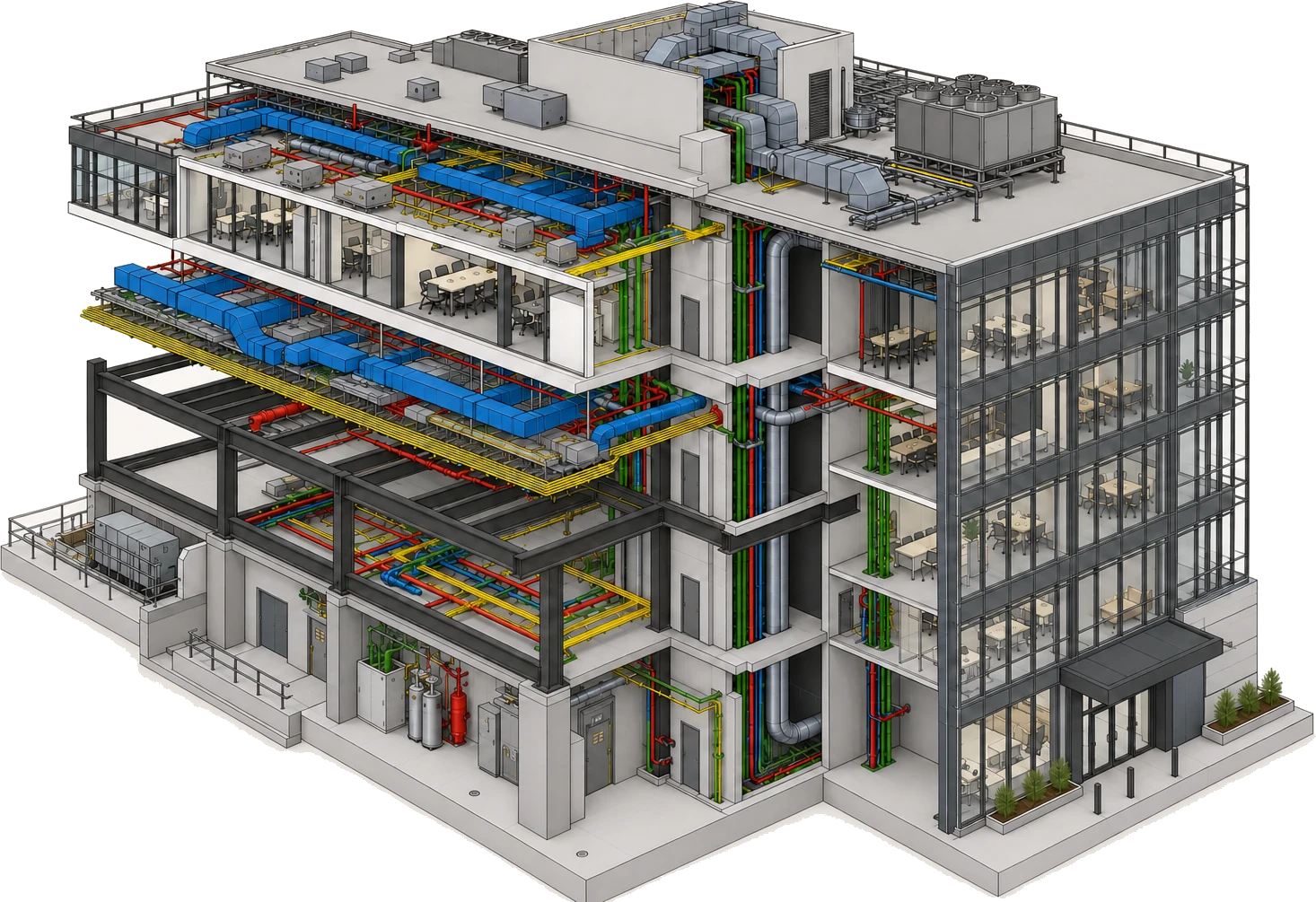
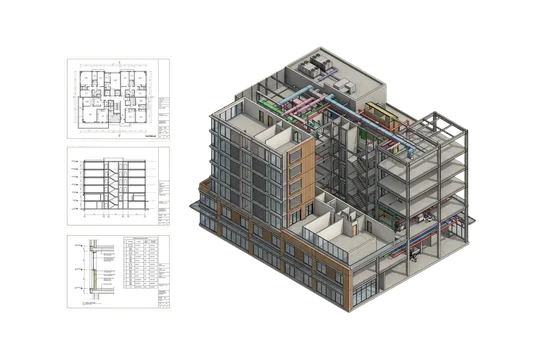
BIM coordination is the process of bringing every discipline model into one place and making sure they fit together before construction starts. We federate the architectural, structural, and MEP models onto shared coordinates, so walls, beams, ducts, pipes, and cable trays sit in the same space and can be checked against each other.
Once the models are federated, we run clash detection to find where elements collide or crowd each other. That check is one step in BIM coordination. The rest is managing what it finds: we log each issue with a location and an owner, take it through the coordination meetings, and re-run the checks once the fix is in.
Settling conflicts in the model means fewer constructability problems and less rework once crews are on site. You get a construction-ready coordinated model that every trade can price, prefabricate, sequence, and build from, along with the clash reports and issue history.
At a glance
-
Run in
-
Revit & Navisworks Manage
-
Best for
-
Multi-trade projects
-
Covers
-
Federation, clash & issue tracking
-
Handover
-
ACC / BIM 360 / your CDE
-
Delivery
-
NWD, IFC & reports
What we deliver
What's included in BIM Coordination
Every BIM coordination engagement brings the discipline models together and keeps them aligned from one round to the next: federation on shared coordinates, cross-trade clash checks, tracked issues, meeting support, and a coordinated model at handover.
-
Model Federation
Architectural, structural, and MEP models combined on shared coordinates into one federated model.
-
Cross-Discipline Coordination
Every trade checked against the others so systems fit together before work starts on site.
-
Clash Detection & Resolution
Hard and soft (clearance) clashes found, grouped by system, and followed through to resolution.
-
Issue Tracking
Each issue logged with a location, owner, and status, then tracked through to closure.
-
Coordination Meetings Support
Federated model, clash reports, and a prioritized issue list prepared ahead of each review.
-
Coordinates & Scope Check
Coordinates and scope of each incoming model confirmed before it is federated.
-
CDE Handover
The coordinated model and reports delivered through ACC, BIM 360, or your own CDE.
One coordinated whole
Disciplines we coordinate
We bring these discipline models together into one federated model and check each one against every other discipline.
Architectural
Walls, floors, roofs, openings, and finishes that set the shell and spaces.
Structural
Foundations, columns, beams, slabs, and framing that carry the building and set the grid.
Mechanical / HVAC
Ductwork, equipment, and air distribution routed clear of structure and other trades.
Electrical
Cable trays, conduits, panels, lighting, and low-voltage systems coordinated for access and clearance.
Plumbing
Domestic water, sanitary, storm drainage, and medical gas runs aligned with structure and ceiling zones.
Fire Protection
Sprinkler mains, branches, and heads set to work with every other system.
We federate all disciplines on shared coordinates and keep them aligned as the design develops, so you work from one coordinated model instead of disconnected discipline models.
Why it matters
Why is BIM Coordination necessary?
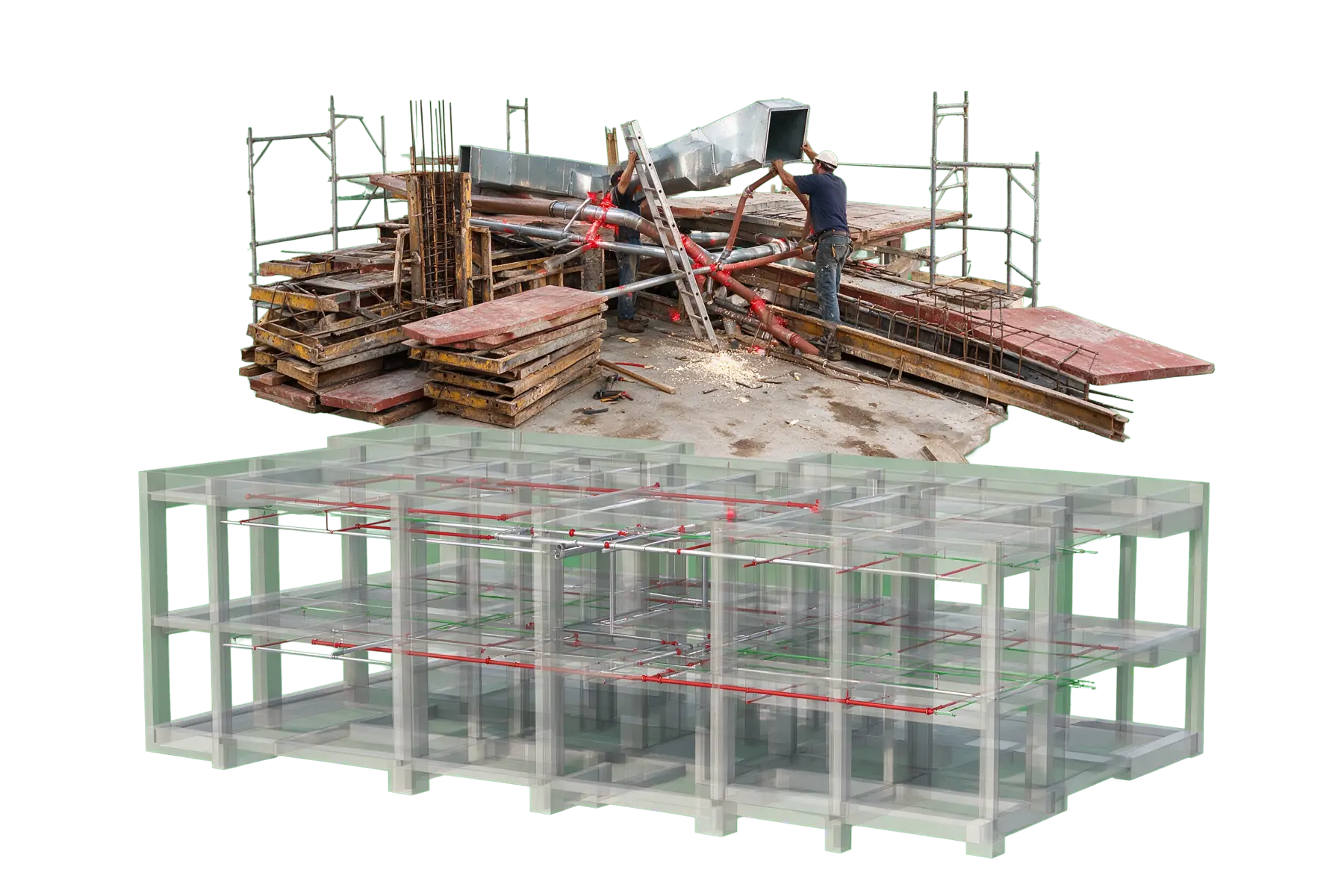
When each discipline models in isolation, the clashes only surface on site, where they are slowest and most expensive to fix. Coordinating the models first turns those collisions into issues resolved on screen, before anyone orders steel or hangs a duct.
Coordination also gives every trade one agreed model to price, prefabricate, and sequence from, and a clear record of how each issue was resolved.
-
One coordinated model prevents the clashes that stop a site and force costly rework mid-build.
-
Every trade works from the same current model, so no discipline is building against a stale one.
-
Resolving conflicts before they reach the field reduces RFIs and change orders.
-
Prefabrication and sequencing run from a model that matches what will actually be installed.
-
The issue log gives a clear audit trail of what was found, who resolved it, and when it cleared.
-
Coordination protects schedule and budget by catching problems while they are still cheap to fix.
Where it applies
Industries We Serve
-
01
General Contractors
A single coordinated model that keeps every trade aligned and the build schedule moving.
-
02
BIM Managers
Federation, clash runs, and issue tracking handled to your BIM Execution Plan and standards.
-
03
MEP Contractors
Ducts, pipes, and cable trays routed clear of structure and each other before fabrication.
-
04
Design-Build Teams
Coordinated models that keep design and construction working from one shared source.
-
05
Structural Engineers
Framing checked against architecture and MEP so penetrations and clearances resolve early.
-
06
Developers
Fewer surprises on site, with clashes resolved on screen before they hit cost and schedule.
-
07
Owners
A coordinated model and issue record that carry through to handover and into operation.
How it works
Our End-to-End Process
01
Collect Discipline Models
We gather the current architectural, structural, and MEP models and confirm the scope.
02
Federate on Shared Coordinates
We align every model to one coordinate system and combine them into a federated model.
03
Clash-Check & Log Issues
We run clash detection across trades and log each issue with a location and an owner.
04
Coordinate Resolution
We support the team through resolution, update the model and issue log, and re-run checks until each issue closes.
05
Issue the Coordinated Model
We hand over the coordinated model and reports through your common data environment.
Why Arcengine
Why Choose Us
A 70+ Person Team
CAD drafters, detailers, and BIM modelers working in one firm with 12+ years of experience.
10,000+ Clashes Resolved
1,000+ coordinated models delivered. Clashes grouped and tracked from find to close.
Works to Your BEP
Federation rules, tolerances, and naming follow your BEP, and we work to ISO 19650 for information management.
Room to Scale
150K+ production hours a year and 90+ clients served in the U.S. and abroad.
Fixed Price, Deadlines Kept
A fixed-price quote up front, and deliverables issued by the date we agree.
Confidential & Secure
We sign NDAs on request, and every model, drawing, and file you send is handled securely.
Explore more
Our Other Services
FAQs
Frequently Asked Questions
BIM coordination services keep the architectural, structural, and MEP models aligned so they fit together before construction. We federate the models on shared coordinates, run cross-trade clash checks, give each issue an owner, take it through the coordination meetings, and re-check until it closes. You get a coordinated model every trade can build from, plus the issue history behind it.
We coordinate in Revit and Navisworks Manage, and we can work in the tools your project already uses. Federated models, clash tests, and issue reports are handed over through Autodesk Construction Cloud, BIM 360, or your own common data environment.
Yes, we coordinate existing discipline models built by your project team. Send them in RVT, IFC, or NWC, with the shared coordinates or a grid reference and your BIM Execution Plan if you have one. We confirm the coordinate system and scope, then federate them.
Both. We detect and log clashes, group them by system, and support resolution with the design team. Where we hold the discipline models, we can carry approved fixes back into them and re-run the checks to confirm they clear.
Yes. We prepare the federated model, clash reports, and a prioritized issue list ahead of each coordination meeting, and update the model and issue log as decisions are made so the next round starts from the current position.
Each issue is logged with a location, the disciplines involved, a status, and an owner, then tracked through to closure. This gives a clear audit trail of what was found, who resolved it, and when it cleared.
Clash detection is one step inside BIM coordination: it tests the federated model for hard and clearance clashes and reports them. Coordination manages everything around those tests, from keeping the models aligned on shared coordinates to preparing each coordination meeting, assigning issue owners, and carrying approved fixes into the models we hold. For clash tests and reports on their own, see our clash detection services.
Yes, your project data is kept strictly confidential, and we sign NDAs on request. The models, drawings, clash reports, and issue logs on your project are managed securely, from the files you send us through to the model we hand back.
Get in touch
One model, every trade aligned
Send your discipline models and shared coordinates, and we will federate them, run clash detection, and return the coordinated model with the issue log. Or start with a pilot on a real model, turned around in 48 hours.