
Drone imagery can be one input to a survey and mapping project. Turning it into useful CAD drawings still requires suitable data processing, drafting and review by the responsible project professionals.
What a drone contributes to mapping
Aerial images can record visible site features across an area. The USGS UAS photography archive describes imagery collected using unmanned aircraft systems. Depending on the capture and processing method, images may support orthomosaics, point clouds and surface models.
The project team must specify the required outputs and assess whether the available data is suitable. Image detail and positional accuracy are different qualities: a sharp photograph alone does not establish survey accuracy.
From aerial data to CAD
The workflow typically includes capture planning, control where required, data processing, checks and drafting. The responsible surveyor establishes the required coordinate reference, evaluates accuracy and resolves the survey information used in the drawing.
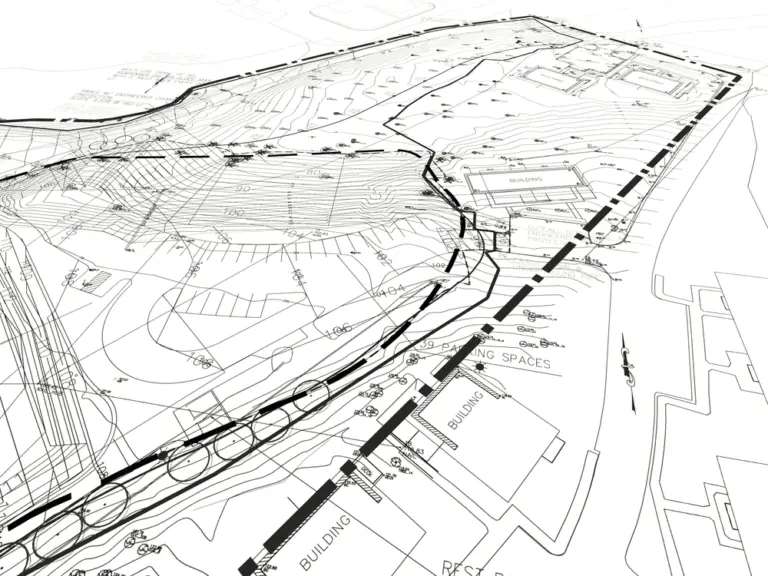
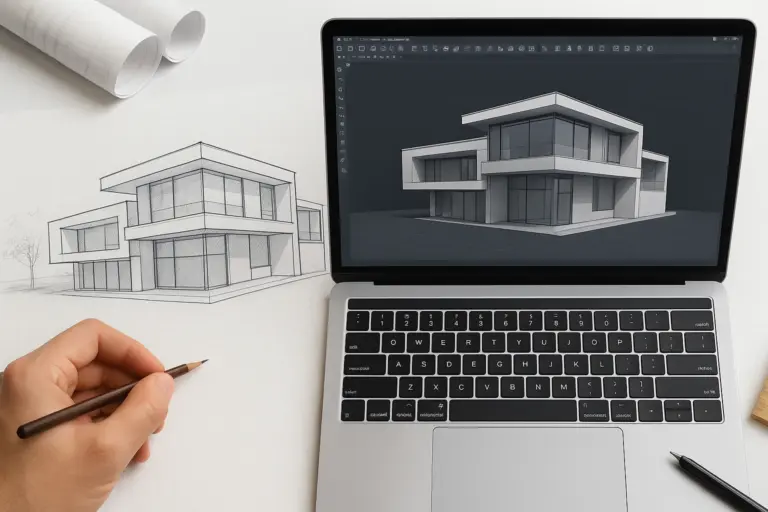
CAD work can include tracing agreed features, organizing layers, labeling and preparing sheets from the supplied data. Importing imagery or a point cloud does not automatically produce a complete survey drawing.
Where drones help, and where they have limits
1. Site coverage
Aerial capture can help record large or difficult-to-access areas. Vegetation, obstructions and inaccessible views can leave gaps, so other survey methods may still be required.
2. Project timing
Capture may reduce some site work, but permissions, weather, control, processing and checking all affect the programme. The right method depends on the site and the deliverable.
3. Visual context
An aerial image can help explain existing features and the site's relationship to its surroundings. It should be used at an appropriate scale and with the source date and limitations understood.
4. Flight and survey responsibilities
The flight operator must follow the rules that apply to the operation. The FAA guidance for commercial operators explains the U.S. Part 107 framework, including pilot and operational requirements.
Permission to fly does not establish land-surveyor licensure or determine a legal property boundary. Engage the appropriately licensed surveyor for boundary work and confirm the scope in writing. A state board's consumer guidance is one starting point for understanding professional roles; requirements vary by state.
Drafting from your survey data
Arcengine provides aerial survey drafting support from the imagery, survey information and instructions you supply. The surveyor directs and reviews the drawing work. Agree on the layers, features, labels, file format and checks before drafting begins.